Phinisi: the hands behind the sails
The wooden yachts of Indonesia carry a story of craftsmanship, shared knowledge and life shaped by the sea.
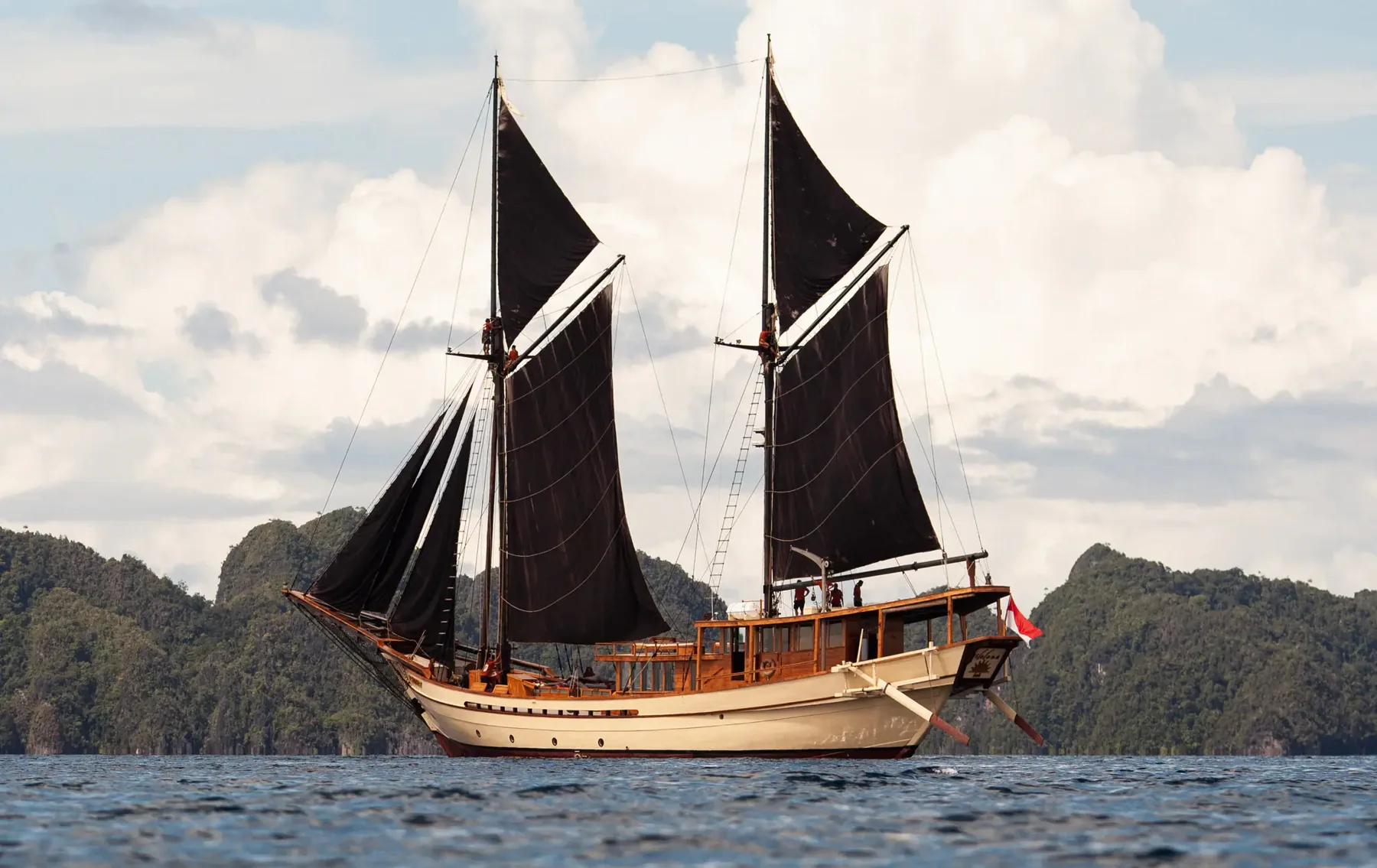
A phinisi can make you notice the journey before you have reached the destination. There is the silhouette of the sails, the warmth of the timber, and the changing relationship between deck, wind and water. Look beyond the beautiful outline and a deeper story comes into view: the people and knowledge behind the vessel.
A name with a particular meaning
You will often see “phinisi” used to describe Indonesia’s wooden charter yachts. The term “pinisi” more precisely refers to the rig and sails associated with the Sulawesi schooner. Understanding that distinction is a useful beginning: a contemporary yacht and the boatbuilding tradition that inspires it are connected, but they are not interchangeable.
In 2017, the art of boatbuilding in South Sulawesi was inscribed on UNESCO’s Representative List of the Intangible Cultural Heritage of Humanity. The recognition concerns living knowledge and skills. It is not a certification awarded to every modern vessel described as a phinisi.
Knowledge carried from one generation to another
Boatbuilding centres including Tana Beru and Bira are places where maritime craft remains closely connected to community life. Skills pass through families and through work alongside other builders. The tradition depends on people learning, practising and passing on what they know.
That is a different way to think about craftsmanship from simply admiring a finished surface. The visible yacht is the outcome of many decisions and many hands. When you travel aboard one, curiosity about those hands can add another dimension to the experience.
Look closely when you step aboard
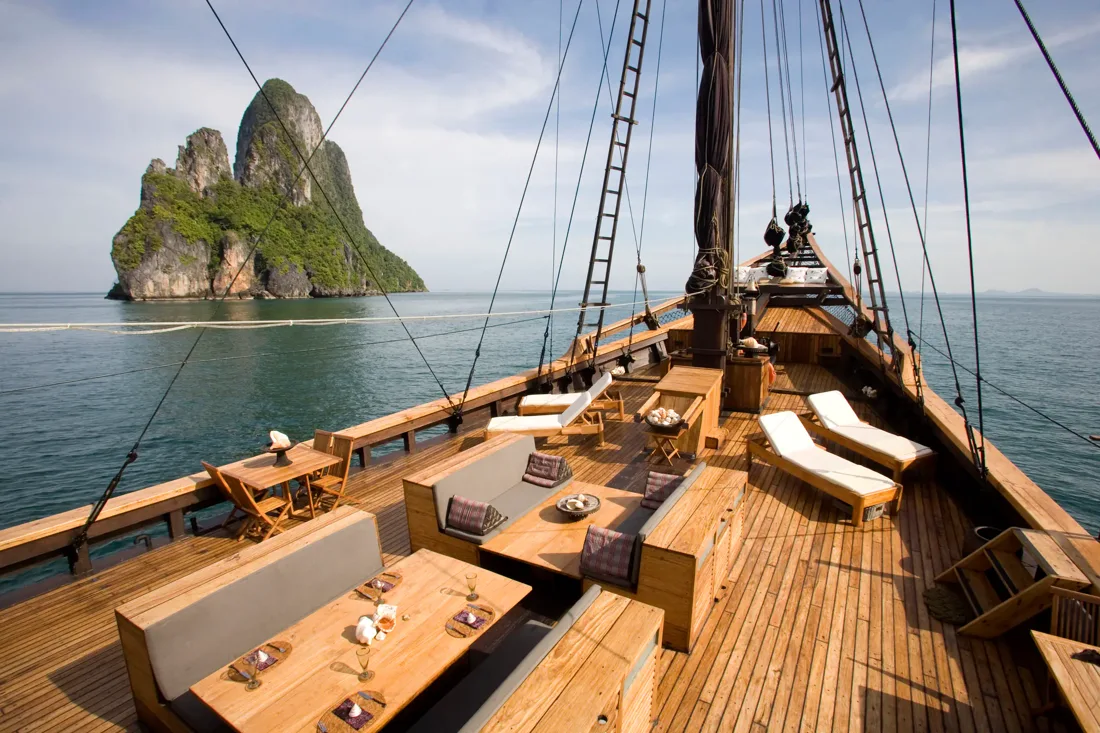
Take a little time to notice the spaces around you. How does the deck invite people to gather? Where can you sit quietly? How do the interiors relate to the vessel’s shape? A yacht is both a working boat and, for a few days, your home.
If the crew has time, ask about the particular vessel: where it was built, how its design has evolved, and what daily care it needs. Let them distinguish documented history from stories they have heard. Each boat has its own background; avoid assuming that every construction method or ceremony is shared by all builders.
Choose the voyage, as well as the silhouette
For a charter, begin with how you want to spend your days. Consider the cabin arrangement, shaded outdoor spaces, water access and the route you hope to follow. Ask about the actual balance of motoring and sailing on your chosen itinerary; raised sails depend on the vessel and suitable conditions.
If visiting a boatbuilding community in South Sulawesi interests you, discuss it as a separate, locally guided visit. It is not an automatic stop on a Komodo or Raja Ampat voyage. Whether ashore or afloat, the most rewarding way to meet a tradition is with time, attention and respect for the people keeping it alive.
Extraordinary places. Personal journeys.