Planning a Komodo charter around reef mantas? Choose between snorkelling and diving, understand cleaning stations and know what to ask before you book.
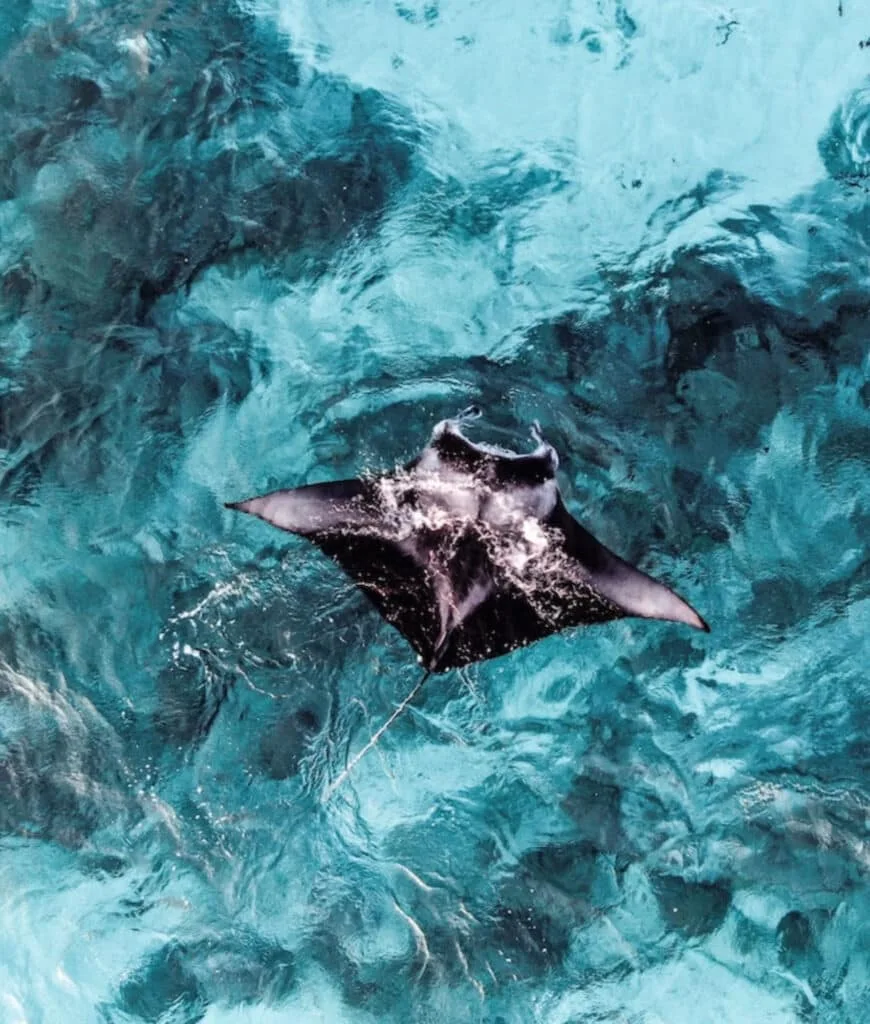
If one person dreams of seeing a manta through a snorkel mask and another wants to photograph it on scuba, “a stop at Manta Point” sounds like an answer for both. On a Komodo yacht charter, it is the beginning of a conversation. What can each guest see from their place in the water? Who will guide them? And what would make this a good morning even if the mantas never come?
What does “Manta Point” mean on a charter proposal?
Ask for the site by name and what the crew hopes to observe there. In Komodo National Park, researchers identified individual reef mantas from photographs taken over six years. Two of the sites, Karang Makassar and Mawan, are only about five kilometres apart. Even across that short distance, individual rays showed preferences for particular sites.
Mantas use these waters for different things, including feeding and visiting cleaning stations, where smaller fish tend to them. A dot on a map tells you little about which behaviour you might witness. In the charter brief, leave the crew room to choose a suitable site on the day. A sighting always depends on the animals.
Choose the outing for the people getting in
For a snorkeller, the question is what can be seen from the surface. A ray passing high in clear water is a different prospect from one circling a reef well below you. Ask the operator how the guide assesses visibility and current, where swimmers enter and how the tender collects someone who wants to finish early. Tell them if anyone would prefer a gentler reef swim.
For a certified diver, the attraction might be waiting beside a cleaning station long enough to see a ray return. Give the operator your certification and recent dive experience. Ask whether a guide and equipment for that outing are included. If divers and snorkellers both want to go, ask who will accompany each group. One tender or guide may mean taking turns.
Explore diving and snorkelling experiences
Leave a clear path across the reef
A cleaning station has an entrance of sorts. A ray needs open water to approach, circle and leave. The most useful question to ask in the briefing is where the guide wants you to wait. A photographer who swims ahead for a head-on shot can occupy exactly the space the manta needs.
The Manta Trust’s guidance calls for a quiet entry at least ten metres from a ray and for swimmers to keep at least three metres away when approaching. Stay to the side, leave touching and pursuit out of the encounter, and follow local instructions if they require more space. Divers should stay beside the cleaning area and clear of the coral. Set your camera before you enter so there is less to do when a ray appears.
What if the site is busy or no mantas appear?
Before choosing a yacht, ask what the crew would do if there were already several boats at the site. Would they wait, offer another reef, or suggest a different time if the charter window allowed? An answer that describes the alternatives tells you more than a list of previous sightings.
If someone wants to stay dry, find out whether they can remain comfortably aboard while the tender is away. Watching from the deck can be a welcome part of the morning, though a surface view of a manta is as uncertain as an underwater one. Choose a second activity everyone would genuinely look forward to.
Compare a Komodo day boat and an overnight yacht
What to include in your enquiry
Send LOV Angels your dates, the number of snorkellers and certified divers, and who would like to stay on deck. Mention whether your priority is underwater photography, an unhurried guided swim or simply the chance of seeing a manta as part of a wider Komodo voyage. Ask for guiding, equipment, tender use and applicable fees to be itemised in the proposal. That gives you something concrete to compare when choosing your boat.
Extraordinary places. Personal journeys.